Motherhood Fertility & IVF
Meet Mitochondria
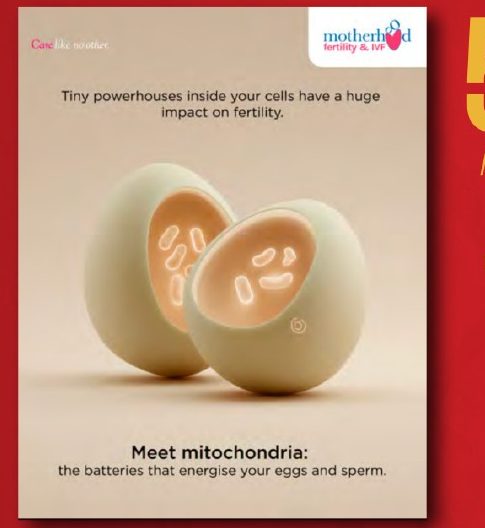
Meet mitochondria: the fertility-science series that made biology scroll-stopping.
517K impressions1.1M views
Industry · Healthcare
Hospitals, IVF clinics and health brands: education that earns trust, inside rules we know line by line.
Social Saga is a digital marketing agency that helps hospitals, fertility and IVF clinics, children's hospitals and health brands across India with healthcare marketing that patients can trust. We plan and make their social media, paid campaigns, websites, search presence and video, inside the National Medical Commission's advertising guidelines of 6 October 2026, the ART Act and the ad platforms' health policies, with every medical claim reviewed by the client's doctors before it is published. Our healthcare work includes Motherhood Hospitals, Motherhood Fertility & IVF, Motherhood Children's Hospital, Nova IVF Fertility, Dr. Heal Pain Cure Hospital, the Neonates Foundation of India and Asia Healthcare Holdings.
Last updated · by the Social Saga team
Three of our series for Motherhood, with the numbers from our deck. All three are education first: fertility science as characters, breastfeeding support new mothers stayed with, and food myths tried in a courtroom. Our posts for Motherhood Hospitals also won Gold for Best Social Media Design (South) and Silver nationally at the afaqs! Foxglove Awards 2026.

Choosing a hospital starts on a phone. Someone searches for a symptom at midnight, reads what a clinic has posted, checks its Google rating, asks a family WhatsApp group, and only then calls. Healthcare marketing is the work of being the clear, careful, credible answer at each of those moments, for the patient and for the doctor referring them.
It is also one of the most regulated categories in Indian marketing, and since 6 October 2026 the rules have been written down in one place. The National Medical Commission's new advertising guidelines treat every post, reel, sponsored story, influencer collaboration and AI-made creative as advertising the moment it has a promotional character. We have read them in full, and this page sets out what they mean for a hospital's marketing.
Healthcare is where we have done our best-known work. We have run social media and campaigns for Motherhood Hospitals, Motherhood Fertility & IVF and Motherhood Children's Hospital, we work with Nova IVF Fertility, and our healthcare roster also includes Dr. Heal Pain Cure Hospital, the Neonates Foundation of India and Asia Healthcare Holdings, a healthcare investment group.
The numbers in our healthcare deck come from those accounts. Motherhood India's Instagram following went from 15.7k to 55.7k with us, more than tripling. Nova IVF Fertility's went from 19.8k to 60.3k, roughly tripling. Motherhood Fertility & IVF's went from 2.7k to 30.7k, more than tenfold. Followers are not the point of healthcare marketing, and we say so on every account, but they are a fair measure of whether people chose to keep hearing from a hospital.
A hospital's marketing has more moving parts than most categories, because the people it has to reach include patients, families, referring doctors, future staff and, for a chain, investors. Each of our services has a healthcare version of itself.
| Service | What it means in healthcare |
|---|---|
| Social media marketing | Education-led Instagram, Facebook, LinkedIn and YouTube accounts: doctors explaining conditions, treatment journeys, myth-busting, health days, and community management that answers questions without diagnosing anyone in a comment. |
| Performance marketing | Google Search campaigns for the treatments people already search for, and Meta campaigns for awareness and education, built around the platforms' health restrictions, with appointment requests and calls as the result we report. |
| Website development | Fast, accessible sites with a doctor directory, department pages, fees, accreditation, an appointment path that works on a phone, and consent forms written for the DPDP Act. |
| SEO | Condition and treatment pages written with the doctors, local SEO and Google Business Profile for every unit, and the review handling the NMC guidelines allow. |
| Photography and video | Doctor videos, facility films, reels and patient-education animation, made so that nobody is identifiable without documented consent. |
| Branding | Identity for a new hospital, a new specialty or a new chain, and the guidelines that keep forty doctors' posts looking like one institution. |
Most healthcare clients take social media with performance marketing, and the two are planned as one calendar, because a reel that patients saved last month is usually the ad that works this month.
Indian healthcare advertising sits under several laws, more than one regulator and ASCI's self-regulation, and the NMC's October 2026 guidelines now tie them together for doctors and institutions.
The NMC guidelines of 6 October 2026. Issued by the Ethics and Medical Registration Board with immediate effect, the Guidelines on Ethical Advertising and Public Communication by Hospitals/Medical Institutions and Registered Medical Practitioners define advertising to include any digital, social-media, sponsored, targeted, influencer-led, search-engine, audio-visual or AI-generated communication with a promotional character. They apply to WhatsApp, podcasts, sponsored posts and news articles intended for promotion as much as to hoardings. Clause 8.1 governs doctors and clause 8.3 hospitals; where they differ, the row says which.
| Topic | What the guidelines say |
|---|---|
| Factual information | Hospitals may publish verifiable facts about their name, location, contact details, departments, facilities, equipment, services, emergency services, accreditation and charges. A doctor directory on the website, with qualifications and registration details, is "materially distinct" from a paid or promotional advertisement. |
| Doctors' posts | Should carry the doctor's name, qualifications, registration status and registration number. A doctor may not solicit patients, promote their own practice, engage a third party such as an agency to market their medical services, endorse any product, or publish cases for promotion. |
| Education | Public health education is allowed if it does not promote personal practice, solicit patients or get monetised through promotional marketing. |
| Comparative claims | Neither doctors nor hospitals may use comparative claims such as "best", "No.1", "leading", "most trusted", "top" or "unmatched" unless they are objectively verifiable, and any award or ranking relied on must be independently verifiable, with the methodology, date and awarding body disclosed. A hospital's factual information may carry no comparative superiority claims at all, and "Best doctors" and "No.1 Specialist" are barred outright. |
| Guarantees | No "Guaranteed cures", "100% success", "painless treatment", "Miracle treatment", "Exclusive cure" or similar unverifiable claims. |
| Testimonials and patient stories | No patient testimonials, reviews, before-and-after photographs, celebrity patients or success stories for promotion. Consent does not by itself make them permissible; patient images may be used only for scientific or educational purposes, anonymised, with specific, documented consent. |
| Inducements | No discounts, limited-period offers, contests, coupons, gifts, cashbacks, referral benefits or free procedures that encourage unnecessary consultation. Charges may be disclosed factually. |
| Reviews and engagement | No fake, paid or manipulated reviews, ratings, followers, likes, comments or views, and no manipulation of search rankings or algorithms. A doctor may not ask for or share patient reviews on social media to promote their practice. |
| Agencies and influencers | Publishing through an agency, influencer or platform does not absolve the hospital or doctor. A doctor may not engage a third party to market their medical services, a doctor's engagement of an agency, influencer or platform may not tie payment to procuring or referring individual patients, and no third party may do indirectly what the doctor or institution cannot do directly. |
| AI | AI-generated promotional campaigns for commercial gain are prohibited; any permitted AI-made promotional content must carry a source mark saying it was made by AI; AI may not be used to create or alter patient images, testimonials, voices or outcomes. |
| Penalties | For a doctor: a warning and mandatory ethics training, then censure and a fine, then suspension for three to six months, six to twelve months for serious violations such as misleading cure claims or digital mass solicitation, and removal from the register for one to three years for repeat violations. Hospitals are dealt with under the Clinical Establishments Act or state law. |
We treat these guidelines as our own rulebook, because the hospital remains responsible for everything it has authorised, commissioned or knowingly permitted its agency to publish.
The 2002 ethics regulations. Regulation 6.1.1 of the Indian Medical Council (Professional Conduct, Etiquette and Ethics) Regulations 2002 still applies: soliciting patients directly or indirectly is unethical, and a doctor may make a formal announcement only on starting practice, changing address or type of practice, a temporary absence, resuming practice, succeeding to a practice or declaring charges. The NMC's 2023 conduct regulations, which would have replaced these, were held in abeyance within weeks of being notified and remain so.
Drugs and remedies. The Drugs and Magic Remedies (Objectionable Advertisements) Act 1954 bars advertising that suggests a drug or remedy can diagnose, cure, treat or prevent the conditions in its Schedule, and any misleading drug advertisement. ASCI's half-yearly report for April to September 2025 found that 82% of the healthcare cases it scrutinised violated this Act.
Fertility and surrogacy. The Assisted Reproductive Technology (Regulation) Act 2021%20Act,%202021.pdf) requires every clinic and bank to be registered, limits treatment to women aged 21 to 50 and men aged 21 to 55, and makes any advertisement about sex selection, including online, punishable by five to ten years in prison, a fine of ₹10 lakh to ₹25 lakh, or both. The PC-PNDT Act separately bans advertising sex determination. The Surrogacy (Regulation) Act 2021 bans commercial surrogacy and any advertisement of it. Our guide to marketing an IVF clinic under the ART Act goes through the details.
Consumer law and ASCI. Under section 21 of the Consumer Protection Act 2019, the CCPA can fine the manufacturer or endorser of a misleading advertisement up to ₹10 lakh, and ₹50 lakh for a repeat, and its 2022 guidelines on misleading advertisements require endorsers to do their own due diligence. Since July 2024, advertisers of health products and services have also had to file an annual self-declaration under the Supreme Court's direction in the Indian Medical Association's case against Patanjali. ASCI's code requires health advice in influencer content to come from someone with relevant qualifications such as a medical degree, and ASCI's 2025-26 complaints report flagged 274 advertisements for breaking the Drugs and Magic Remedies Act and counted 96 cases from clinics and hospitals.
Patient data. Appointment forms, lead forms and WhatsApp numbers collect personal data, and health data is among the most sensitive. The Digital Personal Data Protection Rules were notified in November 2025, with the consent and notice duties applying from May 2027 and penalties up to ₹250 crore. The NMC guidelines also require any advertising that uses digital personal data to comply with the DPDP Act, so every form we build for a hospital carries a plain-language notice and an unticked consent box.
We set out what all of this means for a content calendar in what healthcare brands can post on social media.
The platforms add rules of their own, and they decide what a campaign can even attempt. Google treats health as a sensitive interest category, including treatments for pregnancy and infertility, so a hospital cannot use customer lists, remarketing data or lookalike segments; it can still run search ads for the treatments people type. Google's healthcare policy lets manufacturers promote over-the-counter medicines in India, bars online pharmacies from promoting prescription drugs, and bars ads for pre-natal gender determination products in India altogether. Meta's advertising standards say an ad must not assert or imply personal attributes, a medical condition included, so "Struggling to conceive?" cannot run as an ad, and since early 2025 Meta has restricted the conversion events that health and wellness advertisers can optimise for.
Healthcare campaigns still work when they are planned around those limits from the first day: search ads aimed at clear intent, education that earns attention without targeting anyone's condition, landing pages that answer the question the ad raised, and measurement built inside the restrictions. Our performance marketing page explains how we set up tracking before the first rupee is spent.
Everything the regulators prohibit, patients were already tired of. What they want is the answer to a question they are nervous about, from someone qualified to give it. That is why our best-performing healthcare work has all been education.
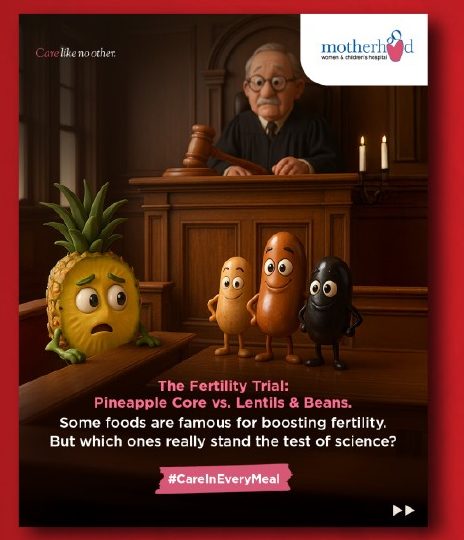
Meet Mitochondria turned fertility science into a series of soft, egg-shaped characters for Motherhood Fertility & IVF and ran as performance creative. #CareInEveryLatch made breastfeeding support something new mothers stayed with: 1.66 million impressions and 14.8 million views. The Fertility Trial put food myths in a courtroom, pineapple core against lentils. None of them names a success rate, offers a discount or asks anyone to book, and all of them went through the hospital's doctors before publication.
The formats follow from that. Carousels explain and get saved, which is why a clinic's best posts are often carousels. A doctor answering one question on camera in ninety seconds beats a facility walkthrough. Health days work when the hospital has something specific to say about them, and festivals work when the post is about health, not about the festival. The account's bio, highlights and pinned posts carry the factual information the NMC allows: departments, doctors with their qualifications and registration numbers, facilities, emergency numbers, accreditation and how to book. Every comment that asks about a symptom gets the same reply: please consult a doctor, here is how.
Google holds health pages to its highest standard. Its guidance on helpful content calls health one of the "Your Money or Your Life" topics, where experience, expertise, authoritativeness and trust matter most, and says that of those, trust is most important. So we write a hospital's condition and treatment pages with its doctors, name the doctor who reviewed each page, show when it was last updated, and keep the structured data honest. Google says there are no additional requirements to appear in AI Overviews or AI Mode, which means the same pages that satisfy a cautious patient are the ones eligible for Google's AI Overviews and AI Mode; our guide to answer engine optimisation explains how we write for both.
For a hospital with physical units, the map matters more than the blue links. Google ranks local results mainly on relevance, distance and popularity, and says more reviews and positive ratings can help. The NMC guidelines put a hard line through that: no fake, paid or manipulated reviews or ratings, and a doctor may not ask for or share reviews or testimonials on social media to promote their own practice. What a hospital can do is make the profile complete and accurate for every unit, reply to genuine reviews, good and bad, and make sure the name, address and phone number match everywhere. YouTube's health features, which add source information panels to videos from licensed healthcare professionals and organisations, are open to English-language applicants in India and are worth applying for.
Fertility is the specialty we have learnt the most from, and the one with the most rules. The Department of Health Research told the Parliamentary Standing Committee examining the ART Bill that India's fertility industry would be worth about ₹57,000 crore by 2030%20Bill,%202020.pdf) (converted to rupees at the exchange rate on 16 October 2026), and the Health Ministry put the number of cases in lakhs a year. The people in that market arrive with more questions and more fear than in almost any other.
So a fertility account is built on explanation: what AMH means, what a cycle involves, what the ART Act requires of a clinic, what age limits apply, why nobody can promise a result. It never mentions sex selection, success-rate guarantees or packages that read as inducements, and its ads cannot use remarketing or lookalike segments, because Google classes fertility treatment as sensitive health content. Our fertility-science series, Meet Mitochondria, is the shape of what works: science made warm, with the clinic's doctors signing off every frame.
The number a hospital cares about is a patient who arrives. So we track appointment requests, calls, direction requests, WhatsApp enquiries and form fills, tag each one to the post, page or campaign that brought it, and report them beside the engagement numbers. A doctor's video is judged on whether people watched to the end and saved it; a search campaign on cost per appointment request and on the questions people actually typed; a website on how many visitors found a doctor and booked.
The report also carries what we are changing next month and why. For a hospital, that often means fewer posts and better ones, because the regulator and the patient agree on this: say less, mean it, and have a doctor's name on it.
We quote against the brief, because one hospital needs a monthly social media retainer with medical review built in, another needs a website for twelve departments, and a chain needs all of it across six cities. Our fee is for the work, and we set it up within the NMC's guidelines, which do not allow a doctor's payments to an agency to be linked to procuring or referring individual patients. Ad budgets are paid to Google and Meta from your own accounts, and GST at the standard rate of 18% applies to agency fees.
If you run a hospital, a clinic or a health brand, send us the brief. We reply with what we would do, which rules apply to it, and roughly what it would cost.
A healthcare marketing agency plans and makes a hospital's or clinic's social media, paid campaigns, website, search presence and content, inside the rules that govern medical advertising. At Social Saga that means education-led content reviewed by the client's doctors, Google and Meta campaigns built around the platforms' health restrictions, websites with doctor directories and consent-ready forms, and reporting on appointment requests rather than likes.
Yes, within limits. The NMC's guidelines of 6 October 2026 let hospitals publish factual, verifiable information about their name, location, departments, facilities, equipment, services, accreditation and charges. They prohibit patient solicitation, inducements such as discounts and free procedures, comparative claims like "best" or "No.1" that cannot be objectively verified, guarantees of cure, before-and-after photographs, promotional patient stories and fake or paid reviews.
A registered doctor may share public health education and factual information, with their name, qualifications and registration number shown. They may not solicit patients, promote their own practice, engage a third party such as an agency to market their medical services, endorse products, publish patient testimonials or success stories, or use an influencer or platform to do indirectly what they cannot do directly. Those are the NMC's 2026 guidelines, read with regulation 6.1 of the 2002 ethics regulations.
Not for promotion. Clause 6 of the NMC guidelines bars hospitals and doctors alike from using patient information, photographs, videos, records or testimonials for advertising except where the law permits it, and says consent does not by itself make a testimonial, before-and-after depiction or success claim permissible. For doctors, clause 8.1 adds no publishing of cases, surgical results, before-and-after photographs, celebrity patients or personal success stories for promotion. Patient images and stories may be used only for scientific or educational purposes, anonymised, with specific, documented consent.
Yes, with restrictions. Google treats health, including fertility treatment, as a sensitive interest category, so a hospital cannot use customer lists, remarketing data or lookalike segments, but it can run search ads for the treatments people search for. Meta bars ads that assert or imply a person's medical condition and restricts the conversion events health advertisers can optimise for. Campaigns work when they are planned around those limits from the start.
With education, inside the ART Act. Every clinic must be registered, treatment is limited to women aged 21 to 50 and men aged 21 to 55, and any advertisement about sex selection is punishable with five to ten years in prison, a fine of ₹10 lakh to ₹25 lakh, or both. So the content explains the science, the process and the law, never promises a result, and never offers inducements. Ads use search intent rather than remarketing data or lookalike segments, which Google does not allow for fertility treatment.
A fee quoted against the brief, for the work, and set up within the NMC's 2026 guidelines, which do not allow a doctor's payments to an agency, influencer or platform to be linked to procuring or referring individual patients. Ad budgets are paid from your own accounts to the platforms, and GST at the standard rate of 18% applies to the fee.
Motherhood Hospitals, Motherhood Fertility & IVF, Motherhood Children's Hospital, Nova IVF Fertility, Dr. Heal Pain Cure Hospital, the Neonates Foundation of India and Asia Healthcare Holdings. Our Motherhood series #CareInEveryLatch reached 14.8 million views, and the Instagram accounts of Motherhood India, Nova IVF Fertility and Motherhood Fertility & IVF grew from 15.7k to 55.7k, 19.8k to 60.3k and 2.7k to 30.7k followers with us.
Killer campaigns and beautiful design that make heads turn and thumbs stop scrolling.
Google, Meta & LinkedIn ads with a map, a compass and a budget that behaves. Sales, not vanity.
Sites that look great, feel smooth and quietly do their real job: turning visitors into customers.
When customers go searching, they find you first. Rankings, organic traffic, breadcrumbs to your door.
Serums, sunscreens and the brands behind them: content that looks like real skin and claims written to survive a complaint.
Pet food, vets, grooming and the brands pet parents trust: content for people who Google their dog's symptoms at 2am.
Restaurants, cafés, QSR chains and packaged food brands: content that makes people hungry, inside FSSAI's rules.
Fill in the fastest brief you'll ever write, or email hello@socialsaga.in. We quote against the brief.